Everything You Need to Know About Ayahuasca
We will cover each of the topics below:
-The science of Ayahuasca
-The history of Ayahuasca
-How is it made?
-Preparation + integration
-What is an Ayahuasca ceremony?
-What / how it can heal (purging)?
-Who should / shouldn’t take it?
-Hape cleanse, plant vomitivo, and plant baths
The Science of Ayahuasca
The ayahuasca brew is traditionally made from the Banisteriopsis caapi vine and the Psychotria viridis leaves (Chacruna). The vine contains compounds called harmala alkaloids — powerful MAO inhibitors (monoamine oxidase inhibitors). On their own, these compounds don’t produce hallucinations. But they play a crucial supporting role: they temporarily block the enzymes in our stomach and liver that would normally break down DMT (dimethyltryptamine), the active psychedelic molecule found in the chacruna (P. viridis) leaves.
Without this inhibition, the DMT in Chacruna leaves would be destroyed before ever reaching the brain. But with the compounds of the vine, the molecule can pass through the digestive system intact, enter the bloodstream, and unlock the experiences ayahuasca is known for.
DMT isn’t foreign to the human body. It’s a compound we naturally produce in small amounts, in the pineal gland and other tissues. DMT interacts primarily with serotonin receptors which play a key role in perception, mood, and consciousness. This receptor activity is thought to underlie the vivid imagery, emotional release, and altered sense of self that characterize the ayahuasca journey.
The odds of two plants being used together as such, one carrying DMT, the other the exact inhibitors needed to make it orally active are astronomically low. There is said to be over 40,000 plants in the Amazon Rainforest, I will leave the math up to you.
The History of Ayahuasca
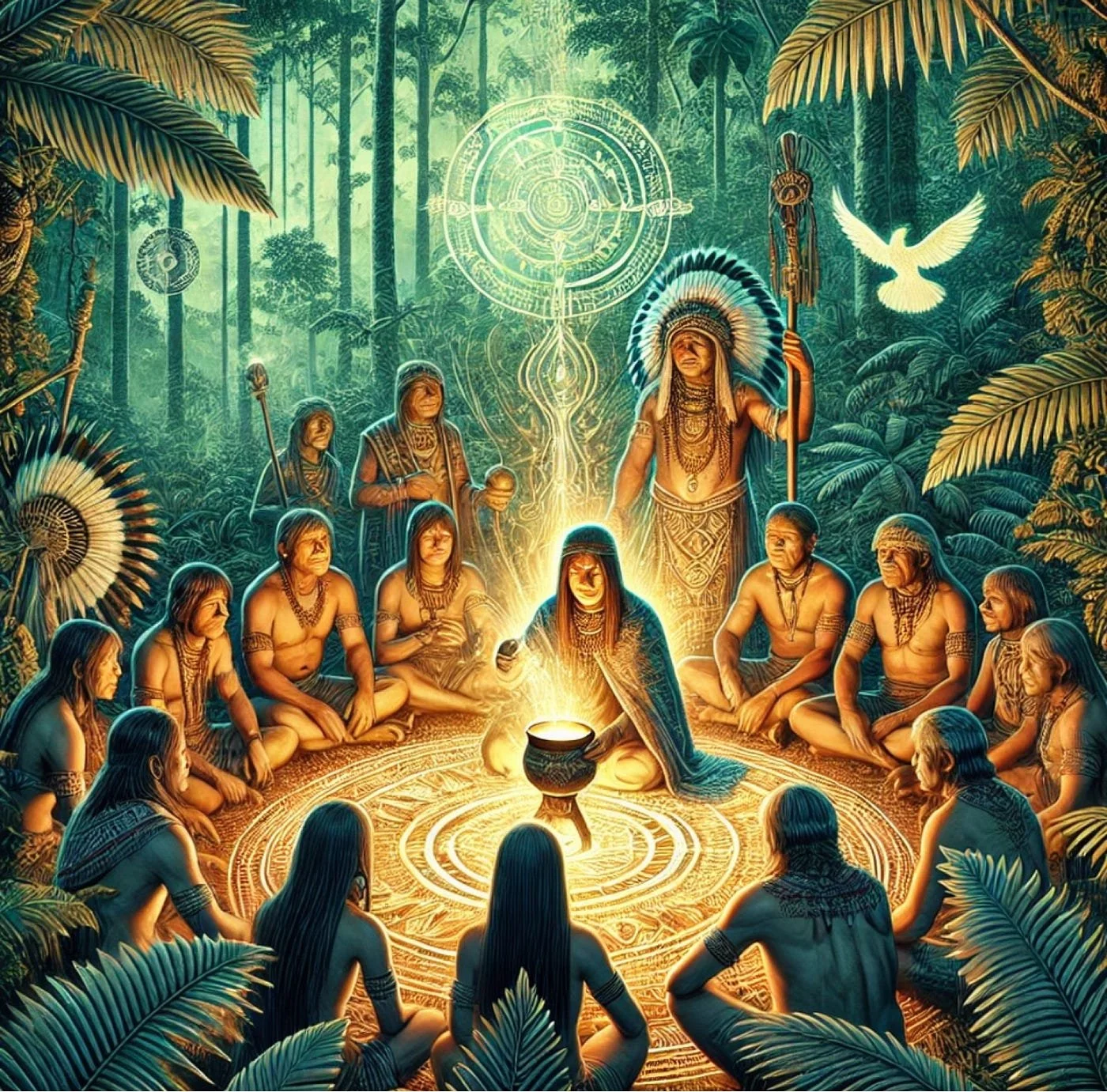
Ayahuasca has deep roots stretching back thousands of years in the Amazon Basin. It is said the plants told people via dreams how to make the medicine. Long before it was known to the outside world, Indigenous peoples across Peru, Brazil, Colombia, Ecuador, and Bolivia were brewing this powerful plant medicine for healing, community harmony, and spiritual insight.
The word ayahuasca comes from the Quechua language — aya meaning “spirit” or “soul,” and huasca meaning “vine.” So it translates roughly as “the vine of the soul.”
Each culture has its own name and recipe. The Shipibo-Conibo people of Peru, the Tukano and Huni Kuin of Brazil, and the Cofán and Secoya of Colombia and Ecuador all maintain long-standing traditions centered around ayahuasca. The songs, chants (icaros), and ceremonial structure vary, but the underlying purpose healing and connection is shared across these groups.
Western awareness of ayahuasca began in the mid-19th century, when explorers, missionaries, and later ethnobotanists described Indigenous ceremonies in their writings. By the 20th century, researchers like Richard Evans Schultes documented its use extensively, helping bridge traditional and scientific knowledge.
Over the past 25 years, ayahuasca has gained international attention. Travelers from around the world now visit Peru, Brazil, and Colombia to participate in ceremonies.
Several factors have fueled this rise in popularity:
Scientific research exploring its potential to treat depression, PTSD, addiction, etc.
Documentaries and books that have demystified its effects and spiritual aspects.
The modern search for meaning — many people see it as a tool for personal growth, trauma healing, or spiritual awakening.
Social media
Today, ayahuasca sits at the intersection of ancient tradition and modern science. While Western interest continues to grow, Indigenous communities and responsible facilitators stress the importance of respect for the plants, for the cultures that preserved this knowledge, and for the profound power of the experience itself.

How is it made?
The process of making Ayahuasca can vary depending on culture. Here at Niwe Rama, this is the general process of making it.
First, collect the Ayahuasca vines and Chacruna leaves. These are both combined into a large pot with water. From here, the mixture sits over the fire for hours, refining the liquid inside to form the final product. The final product is a very small amount of dark brownish water that includes the refined chemical components of the Ayahuasca vine and Chacruna leaves.
Sometimes the plants can be refined seperately with just the Ayahuasca vines and just the Chacruna leaves and then combined after. Some cultures will add other plants to the mixture. Each shaman has their own unique touch based on intuition or methods that has been passed down from their ancestors.
The link below shows Maestro Misael making the medicine
https://www.instagram.com/reel/DQorqJ6ALa9/?utm_source=ig_web_copy_link&igsh=MzRlODBiNWFlZA==
How to prepare for an Ayahuasca retreat?
To prepare your body, mind and spirit for an Ayahuasca retreat, certain things are recommended to be avoided. The medicine can still work if these things are in your system, but having you body, mind, and spirit prepared allows the medicine to work with you more smoothly.
Starting 14 days before the retreat, avoid the things listed below:
-pork and red meats
-junk foods / processed foods
-spicy, acidic, or sugary foods
-dairy products
-lower salt intake
-alcohol, cannabis, or other mind altering substances
-hard street drugs
-caffeine (coffee, cacao, tea, etc.)
-sexual activity (including masturbation)
-seed oils (small amount of olive, coconut, or avocado are okay)
-mild pharmaceuticals (Advil, Tylenol, or others similar)
These medications can be dangerous when mixed with Ayahuasca should be stopped AT LEAST 2 weeks prior. Please consult with your doctor before stopping.
>Other MAOIs
>SSRI’s (any selective serotonin reuptake inhibitor)
>Antihypertensives (high blood pressure medicine)
>Appetite suppressants (diet pills)
>Medicine for asthma, bronchitis, or other breathing problems; antihistamines, medicines for colds, sinus problems, hay fever, or allergies (any drug with DM or Tuss in its name).
>CNS (central nervous system) depressants
>Antipsychotics
>Barbiturates
Overall it is recommended to just live as healthy as possible before coming to a retreat. We understand that this can be difficult and everyone’s schedule is different. If unable to follow the recommendations on the left, that is okay, the medicine will work with each person in their own unique way. The medications to be avoided are mandatory and will be screened before booking.
Journaling, spending time in nature, breathwork, exercise, are all great things to put yourself in the best state of mind coming into the retreat.
What to Bring to a Retreat
-Light weight clothing for ceremony and chilling around the center
-Long sleeves & pants for jungle walks
-Flashlight/headlamp (ideally with redlight)
-Reusable water bottle
-Natural mosquito repellent
-Personal toiletries
-journal, book, or something for personal creative expression
-sandals and sneakers (can get muddy)
-Cash in Peruvian SOLES for final payment and any extras for Shipibo market or personal expenses
-Any other personal items for health, comfort, or to do during free time
Other Thoughts
While doing your own research is important before committing to such an experience, it is also important to come with an open mind. After basic research and deciding this is something you want to partake in, we personally recommend not to read more about it. Reading too much can cause participants to come with certain expectations about how the medicine or retreat should work or be run. The medicine works completely different with everyone. Some experiences may rhyme, but none are ever completely the same. For that, it is best to come without many thoughts about how things should be to allow things to unfold naturally.
There are 2 books that gives good stories or concepts to think about for those that were interested in reading more detailed before coming. Those are listed below
The Fellowship of the River - Joseph Tafur
The Cosmic Serpent - Jeremy Narby

What is an Ayahuasca Ceremony?
An Ayahuasca ceremony is a sacred space where the magic happens. When the medicine is taken, it opens a portal into the spiritual realm where healing, learning, and deep connection can happen. The ceremony is guided by a shaman and along side shamans are facilitators to help guests at anytime. Ceremonies are almost always done at night in a building called a maloca. Here is generally how a ceremony will look.
8:00-9:00pm: Ceremony space is prepared to ensure safety and comfort. Shamans may burn Palo Santo or blow Mapacho to protect the space from bad energies.
9:00pm: The medicine is drank 1 by 1, with the shaman usually doing a light whistle into each cup to set their intentions and connect with the participants.
9:15pm-10:00pm: All lights go off and the Maloca is silent. This is time to allow the medicine to enter mind, body and spirit. Timing can vary based on each person and each ceremony. This is a time to relax, breathe, and focus on your intention
10:00-12:00pm: The shamans begin singing their healing icaros to guide the ceremony. This is where users often report going to the spiritual realm, deep emotional release (via purge), colorful visions, contact with spiritual entities, different states of consciousness, and more.
12:00-1:00am: The medicine may be starting to cool off. The shamans will likely do personal icaros or help those that may still be deep in the medicine. They may blow Mapacho smoke (soplar) over the head and body of participants or use Agua de Florida to do this.
1:00-2:00am: Shamans are likely closing the ceremony. This is good time for guitar or peaceful music to bring people back to their bodies. Light conversations and laughter may begin to arise.
After 2:00am: Time to rest. This is just a general outline and this can vary greatly depending on each person and each ceremony.
More Information on Ceremony
Every place is different but here is some more information based on how ceremonies are run at Niwe Rama. Our ceremonies start at 9pm in the Maloca, although it is recommended to get their 30-minutes before to get comfortable and prepare mentally for the ceremony. Here our some general guidelines to help participants understand the ceremony better.
-Participants can wear whatever is comfortable for them during ceremony
-No physical contact or conversations with others during ceremony to respect the sacred space of the ceremony
-Do not leave the ceremony space unless guided by a facilitator
-If having a difficult time or need help going to the bathroom, advise a facilitator
-No phones in ceremony space to respect the privacy of those participating
-Allow the experience to happen naturally
Sometimes the medicine can take you on your own journey where things may happen out of your control. This can happen, is understandable, and is why their are facilitators to help keep you safe and bring you back into your body.
What and How Can Ayahuasca Heal?
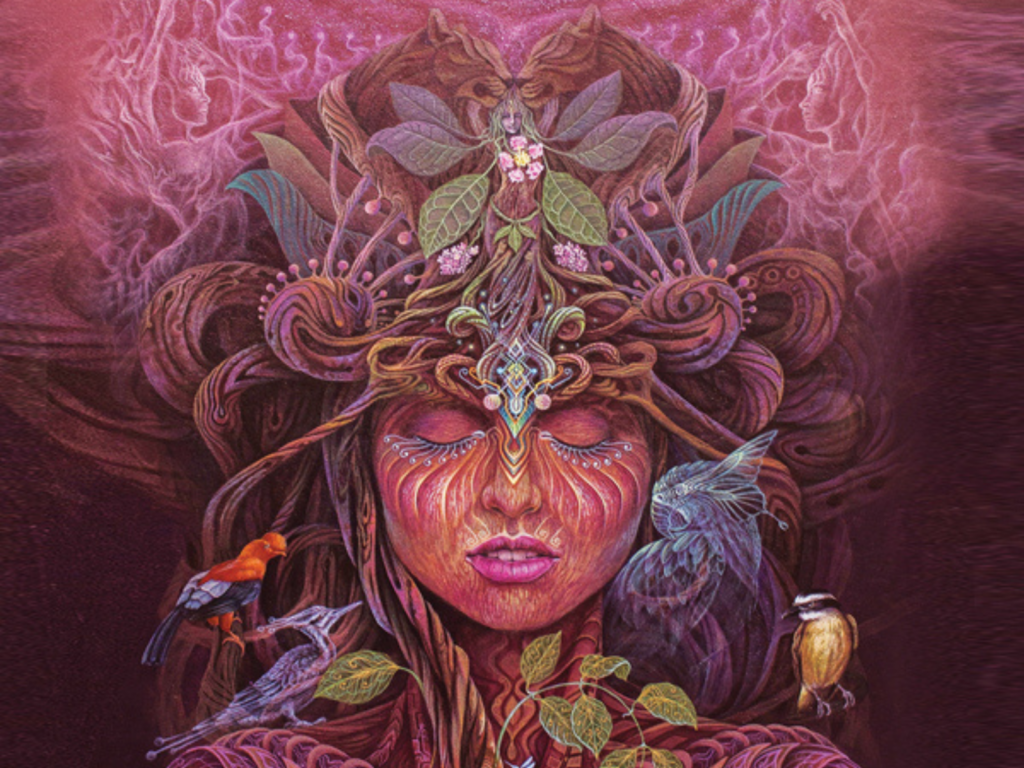
Trauma: Many people report that ayahuasca helps them access and process buried emotions, including childhood trauma, PTSD, grief, and fear.
Depression and anxiety: Ayahuasca can lead to relief from depressive or anxious symptoms by helping users confront core emotional wounds that are causing these feelings.
Addiction: Ayahuasca can help with addiction by rewiring the brain. This can give those addicted, a different perspective on their habit which has a high chance of leading to change.
Physical relief: People sometimes experience improvements in conditions with strong emotional or stress components (chronic pain, autoimmune issues, digestive problems, etc…).
Detoxification: Ayahuasca often induces vomiting and diarrhea (“la purga”), traditionally understood as a form of physical and energetic cleansing. There are direct experiences of Ayahuasca even healing cancer.
Connection and insight: Many participants describe encounters with a “spirit of the vine,” ancestral guides, or deep awareness of interconnection with nature and the universe.
Reorientation of life purpose: People often come away with renewed clarity, forgiveness, or a sense of unity that helps guide their life choices.
The list can go on. There are so many first-hand experiences of Ayahuasca helping to heal various physical, psychological, or spiritual issues in individuals. There are endless possibilities as to what Ayahuasca, or other Amazonian plant dietas can heal if done under the right conditions.
This is greatly understudied and still a mystery to some degree. We believe the best way to explain it, is with an analogy. Pretend our body / mind / spirit are one large computer. Pretend that Ayahuasca is a master computer program. When you consciously decide you want to take the medicine, it begins scanning your mind, body, and spirit. Sometimes, it may even be watching over you / scanning you before you consciously decide.
Everything is energy. So when we experience physical pain or bad thinking patterns, this is simply negative energy accumulated at some point in our life that is expressing itself. It may be a energy blockage or a negative entity that has taken form in your body. Regardless, this energy is sending signals to your body or mind that do not have a good impact on your life. Your body, your computer, is sending signals to the user that something is wrong and needs to be fixed. Here is where Ayahuasca comes in. It is able to scan your computer like a cleaning program, find these computer viruses, and take them out. Taking these negative energies out is often called the purge which can come in the form of vomiting, excessive yawning, bowel movements, crying, screaming, and more. Now once these viruses are out, your computer runs much smoother, faster, and more clear. These viruses can take many different forms in the individuals computer and Ayahuasca’s computer program is a master at finding them and helping remove them.
This is a extremely general way of conceptualizing how the healing happens. It truly is magic and the only way to get some sort of understanding is to experience it first hand.
Who Is Ayahuasca For?
Ayahuasca can be for anyone but it is not to be taken lightly. This is a master plant that can bring deep healing, insights, or transformation in ones life. If one is not prepared mentally and comes into it more as a joke or to “get high”, they could be in for an unpleasant experience. If coming with respect and good intention, the chances are very high it will have a profoundly positive effect on your life. Those seeking truth, true healing, deep connection, purpose, or genuine interest in learning about this medicine / culture, the medicine is for you. Those who just see posts online and want to be a part of the trend, or are looking for the next “high”, this is not for you.
As mentioned in the ‘Preparation’ section, there are certain medications that you must be off of before taking the medicine. If you have questions about if the medicine is for you, please feel free to reach out.

Other Plant Medicine’s We Use
Rapé Cleanse- Made with a mixture of water, tobacco, and ajo sacha (can vary). This is used to help clean sinuses and is a light purgatory medicine often releasing mucus, sneezing, or light tears. We use this as a minor cleanse to start the week.
Plant Baths- These can be used with nearly any master plant but throughout our retreats, guests will bathe with Wayusa. Wayusa is a very aromatic plant and is used for spiritual cleansing and protection before each ceremony. It has a very calming nature that helps guest come into each ceremony feeling good.
Vomitivo- This can also be used with many different master plants. The shamans will use Manzanilla, Piñón Colorado or others depending on their intuition. These are used to cleanse the stomach, liver, and energetic body at the start of retreats.
Plant Dietas- These are for those that want deep healing or learning. Usually with the minimum dieta being 1 month. The plant will vary based on the individual’s unique needs. We have 50+ plants that can potentially be dieted at our center.